The Decision Every SaaS Founder Faces
SEO Friendly Website Basics and What Your Web Team Should Set Up

Zubair Ali Akbar
What makes a website easy for Google to find and understand? Plain words on the basics, who sets each one up on your platform, and what to ask a web team.
You ask a web team for an SEO friendly website and they say yes. Then what did you actually buy?
The phrase sounds like a secret. It is not. It means a site that Google can find, read and understand, and that people find easy to use.
Quick answer. An SEO friendly website has clear page titles, readable links, fast and mobile-ready pages, and helpful words on each page. The build sets up some of this. You write the rest. Ask your web team which is which.
What makes an SEO friendly website?
SEO is short for search engine optimization. In plain words, it is making your site easy for Google to understand.
Google's own SEO starter guide says its crawlers (programs that visit pages) find most sites on their own, mainly by following links from pages they already know. It also says there are no secrets that automatically rank a site first.
So think of it as good housekeeping, not a trick.
What should the website build get right?
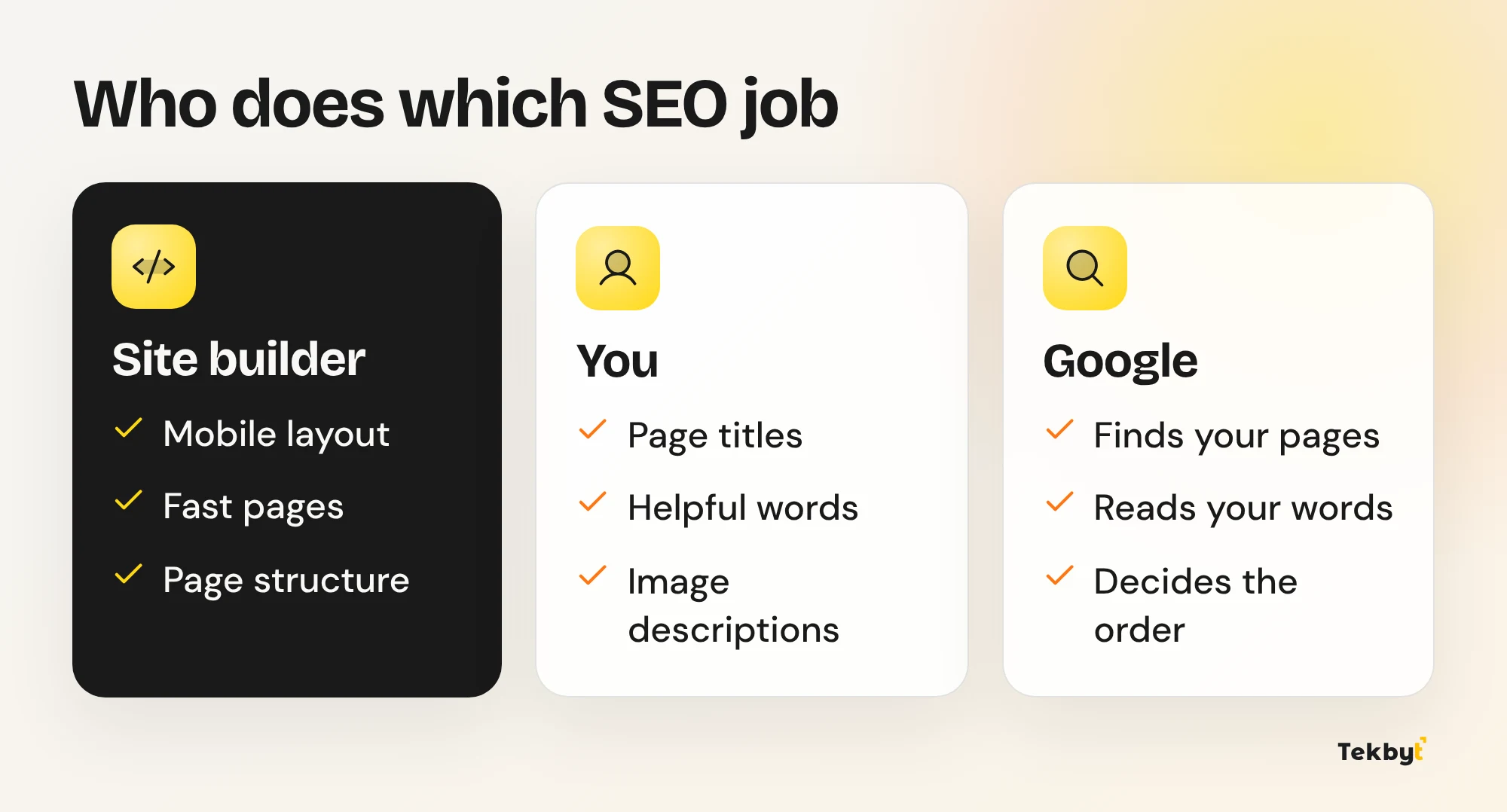
These are jobs for whoever builds the site. A good team does them before launch.
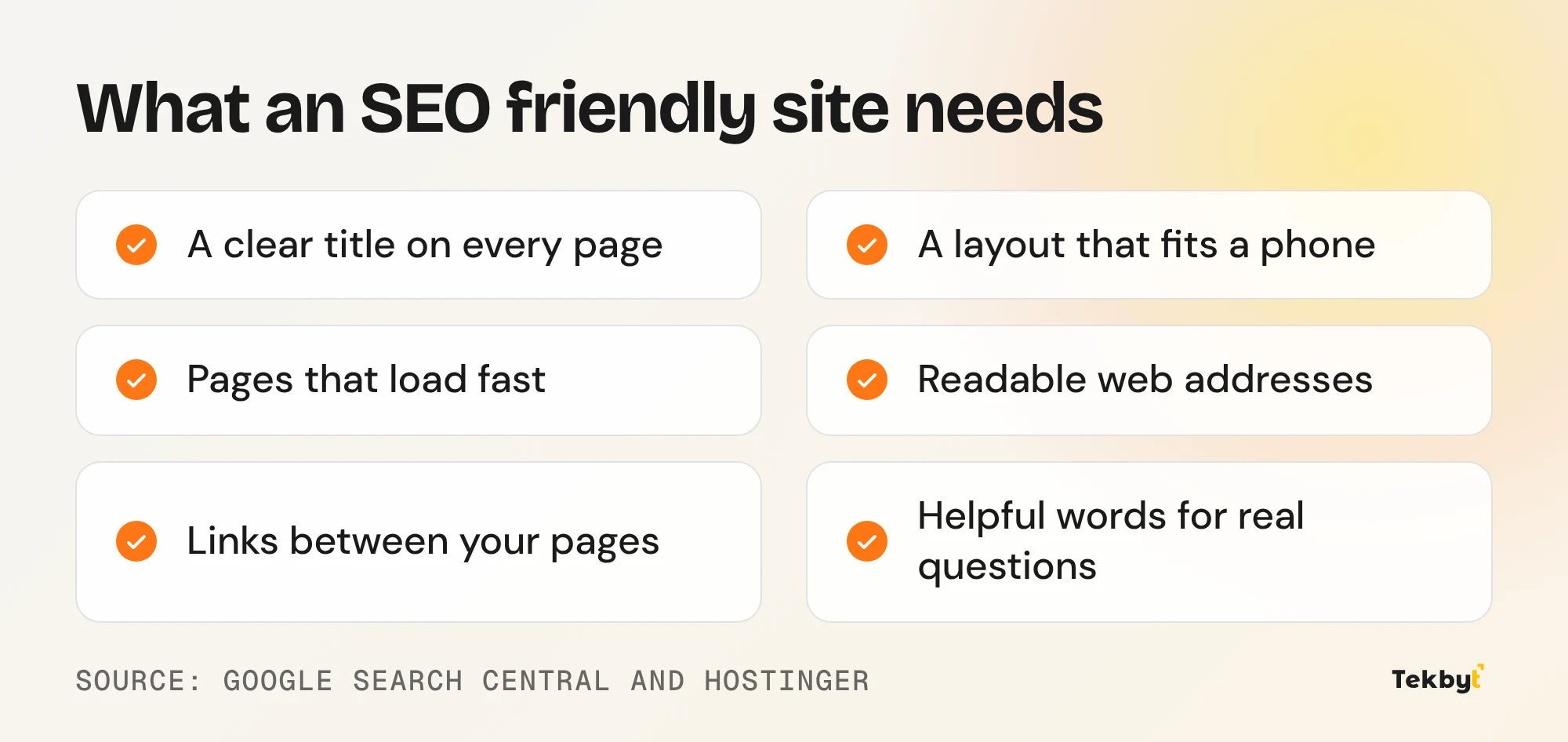
- Mobile-ready pages. The layout fits a phone screen without pinching or zooming.
- Fast loading. Heavy images and extra add-ons slow pages down. Our guide on website speed covers the usual causes.
- Clear page structure. One main heading per page, then sub-headings in order, so both people and Google can scan it.
- Readable web addresses. Google suggests words in the address that help people, not random codes.
- Links between pages. Every page should be reachable from another page on your site.
The Hostinger guide lists many of the same items, plus tidy code and image sizing.
What do you write yourself?
No platform can write these for you. They depend on what your business really does.
- Page titles. Google says a good title is unique to the page, clear and accurately describes it.
- Short page descriptions. These are the small summaries that sometimes show under a search result.
- Helpful words. Answer the questions your customers really ask, in their language.
- Image descriptions. Short text (called alt text) that says what a picture shows.
- Link words. Say what the next page is about, never just click here.
A dental clinic, for example, should have one page per treatment. Each has its own title and its own plain answers.
Who sets this up on each platform?
Most top guides skip this part. They give you a long list and leave you to guess who does what.
Here is the honest picture.
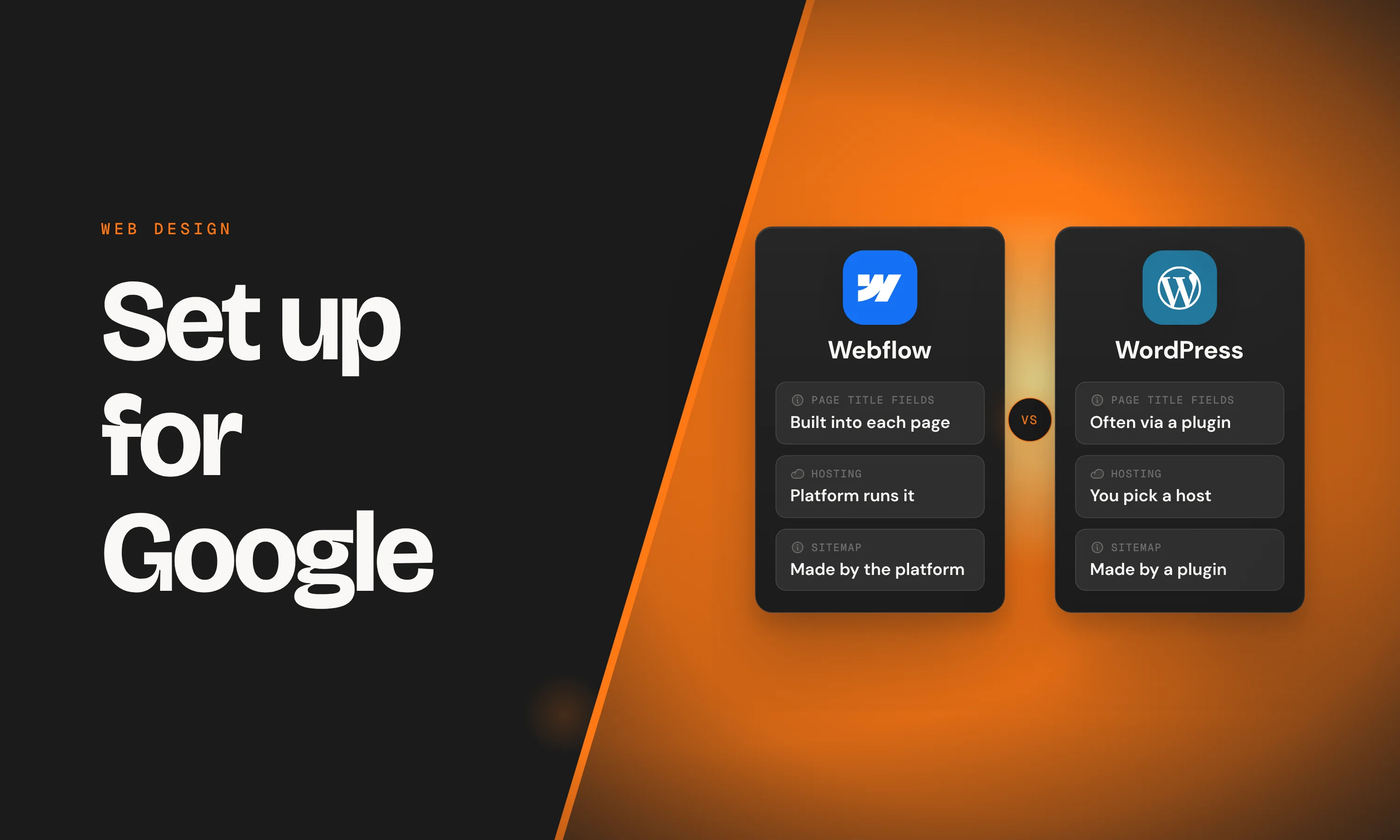
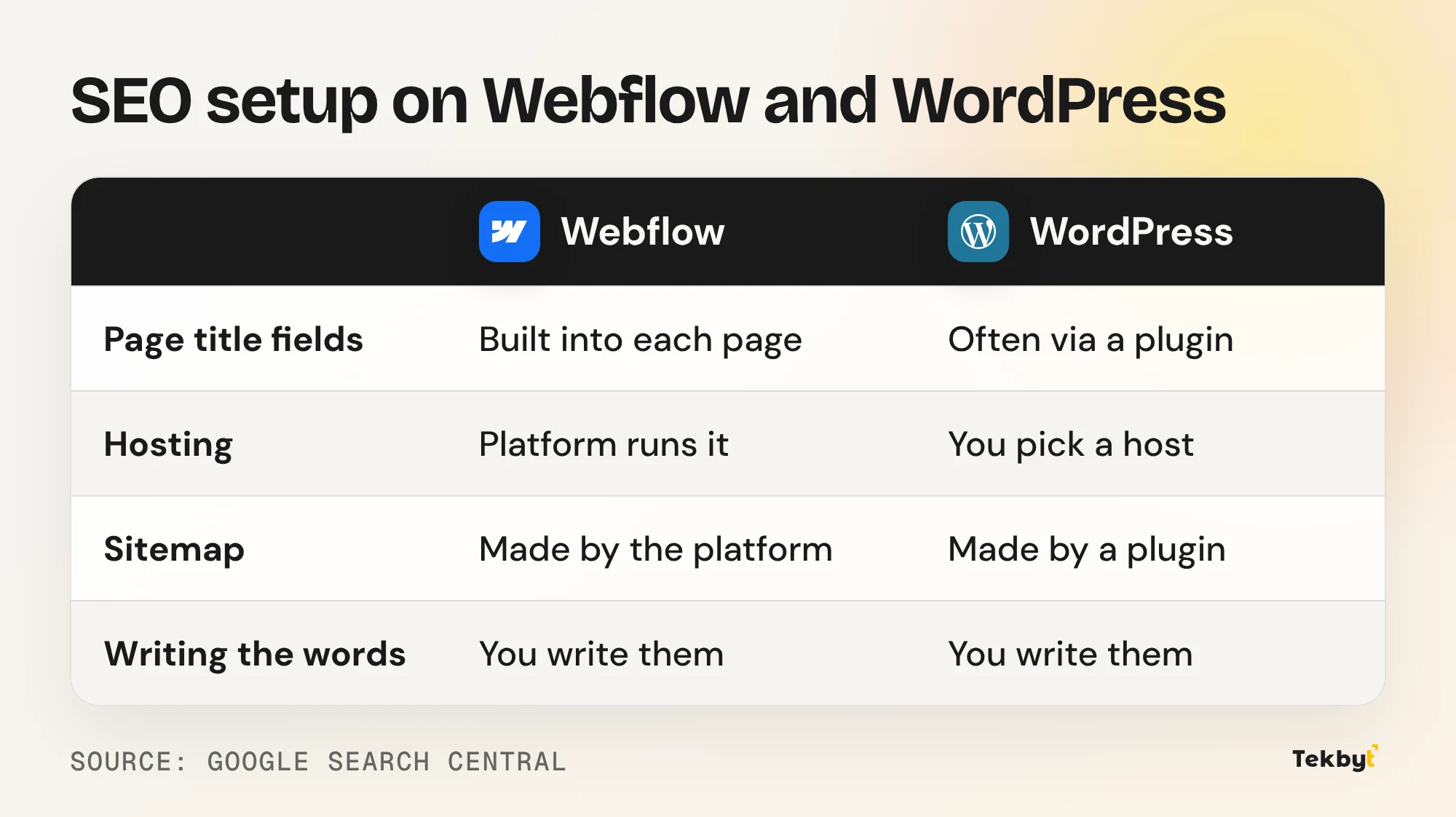
On Webflow and Framer, the page fields for titles and descriptions are built in, and the platform runs hosting. On WordPress, you often add a plugin (an add-on tool) for these fields and choose your own host. Shopify gives you title fields for each product and page.
On every platform, someone still has to fill the fields in well.
None of this makes one platform best for everyone. Our posts on Webflow vs WordPress and on who handles hosting go deeper on the differences.
Do you need a sitemap?
A sitemap is a file that lists the pages you care about. Google calls it optional and says it is not required.
Many platforms make one for you. It helps on bigger sites, but it does not replace good links and helpful pages.
Can any website promise page one on Google?
No. Nobody outside Google controls the results, and honest teams say so.
Be careful with anyone who promises a ranking, sells bulk links or says they can force Google to list you. Google's spam rules ban these tricks, and they can hurt your site.
What should you ask a web team?
Keep the questions plain:
- Which of these basics does the build cover, and which are mine?
- Who writes the page titles and descriptions?
- Will you set up Google Search Console so we can see how Google reads the site?
- How will old page addresses be handled if we change the site later?
A clear answer names real pages. A vague answer is a warning sign. Our guide on when to redesign shows how to keep what already works.
The honest takeaway
An SEO friendly website is a well-built site with helpful words on every page. The build is a one-time job. The words and upkeep never fully stop, so put website upkeep on someone's list.
Not sure whether your site is built the way Google likes it? Tekbyt designs and builds business sites on Webflow, Framer, WordPress, Shopify and custom code through our web design service. Book a 30 minute call.