The Decision Every SaaS Founder Faces
AI Chatbots for B2B SaaS: When They Work and When They Don’t

Zubair Ali Akbar
Every B2B SaaS founder in 2026 gets pitched to add an AI chatbot to their product. Half of these chatbot integrations improve the product. The other half make it worse.
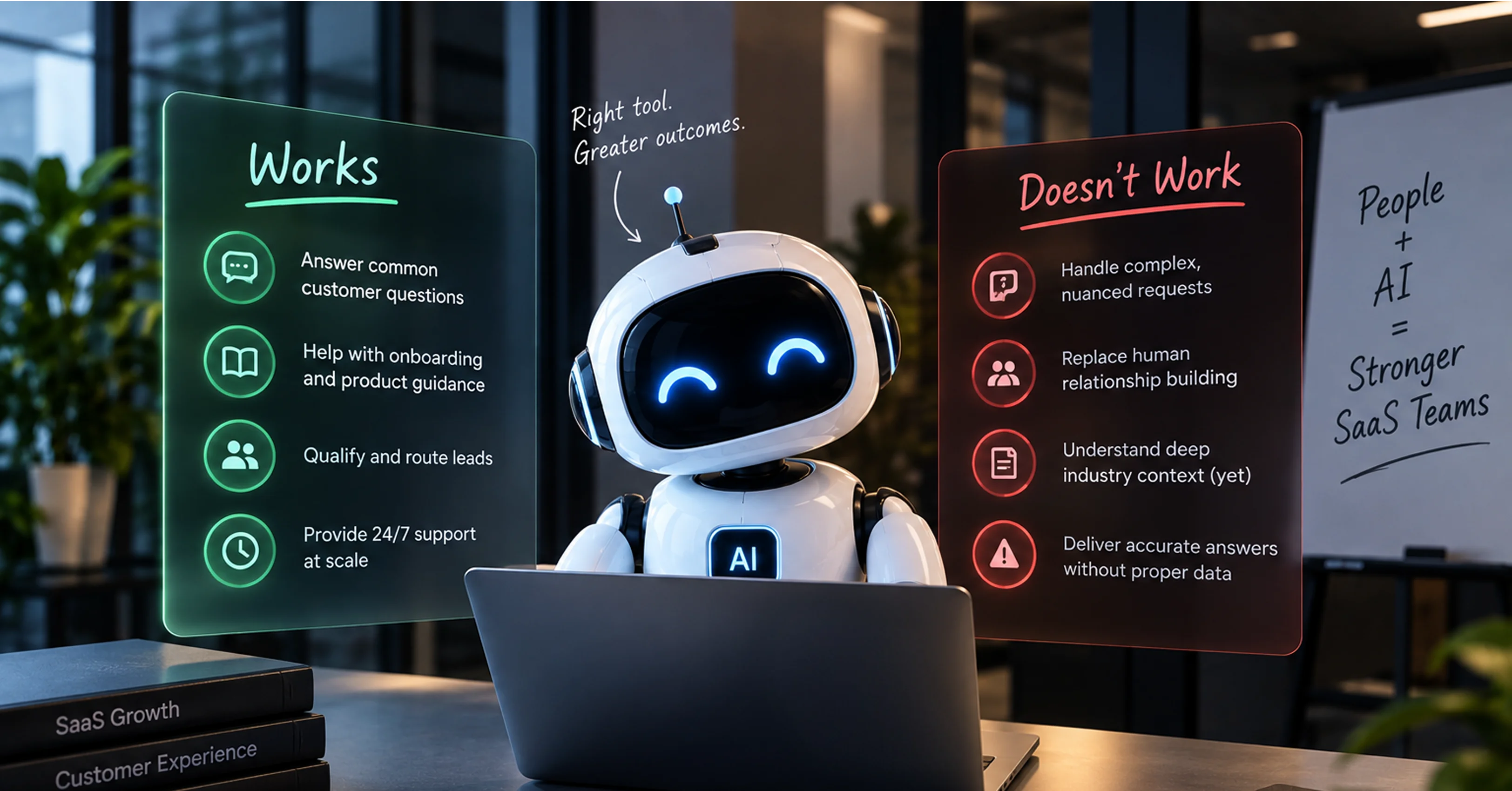
Here is the honest framework for deciding.
When chatbots work: repetitive, well defined tasks
Chatbots excel when the user’s intent is clear and the answer lives in a bounded knowledge base. Examples:
Support: “How do I export my data?” A well-trained bot on your help center answers this in 2 seconds. Users prefer the immediacy over waiting for email support.
Documentation search: “Show me the API endpoint for creating users.” A bot with access to your docs answers with the endpoint URL and code sample. Much faster than search read.
Simple data lookups: “How many users signed up last week?” A bot connected to your analytics returns the number directly.
The pattern: bounded knowledge, clear intent, factual answer. Chatbots win here.
When chatbots hurt: open ended tasks and complex workflows
Chatbots fail when the user’s task requires multiple steps, judgment, or interface exploration. Examples:
Complex workflows: “Set up automated invoicing for my top 20 customers.” No chatbot can walk a user through 15 UI steps effectively. Users end up frustrated after 3 back and forth messages.
Product discovery: “Show me what your product can do.” Users exploring your product
need visual navigation, not conversational Q&A. A chatbot forcing exploration through chat feels backwards.
Sensitive decisions: “Should I upgrade to the Enterprise plan?” Buyers considering purchases need pricing pages, comparison tables, and human conversations, not bot responses.
Anything requiring precision: “What was my ARR growth last quarter compared to the same quarter last year?” Users need accurate reports, not bot-generated numbers they cannot verify
The RAG rule: bots need real data, not general intelligence
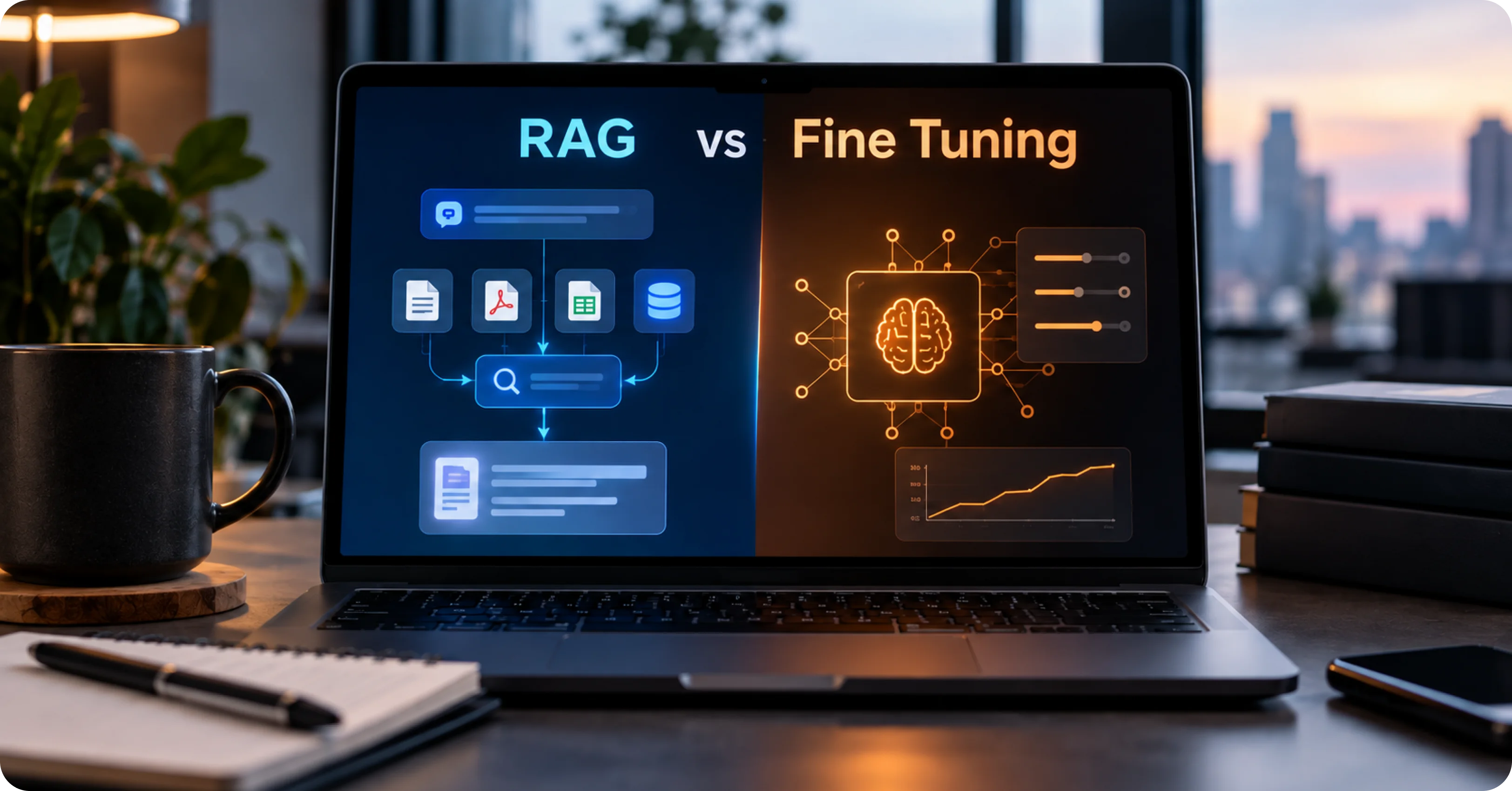
The best B2B SaaS chatbots use Retrieval-Augmented Generation (RAG). Your chatbot connects to your knowledge base, help center, and product data. It retrieves relevant chunks, then generates answers using that specific context.
Chatbots without RAG (just wrapping ChatGPT) fail because they hallucinate facts about your product. Chatbots with proper RAG succeed because they answer with real information.
If you cannot connect the bot to real data, do not build the bot.
Design principles that separate good from bad chatbots
Show confidence levels. If the bot is unsure, it should say so and offer to escalate.
Always have a human handoff option. “Talk to a person” should be one click away, every time.
Log every conversation. Review failed interactions weekly and improve the underlying data.
Do not autoplay the chatbot. Popups that open the bot the moment a user lands on a page are aggressive. Let users initiate.
Show sources. Every bot response should cite where the answer came from (help article, doc, product data).
When to skip the chatbot entirely
If your product has fewer than 100 active users, skip the chatbot. The engineering investment does not pay back at that scale.
If your product is complex enough that most support questions require product changes, skip the chatbot. The bot cannot fix bugs.
If your support volume is low, skip the chatbot. Email or in-app messaging works fine.
Considering adding AI chatbot features to your B2B SaaS product? We help teams scope AI features honestly and skip the ones that will hurt more than help. Book a 30 minute call.