The Decision Every SaaS Founder Faces
Next.js Website for Business and When Code Beats a Website Builder

Zubair Ali Akbar
Is a Next.js website right for your business, or is a website builder enough? Plain answers on what the site must do, who edits it each week, who fixes it, and how to move later.
You run a business and you need a Next.js website for business use. Or someone just told you to "build it in Next.js", and you have no idea what that means.
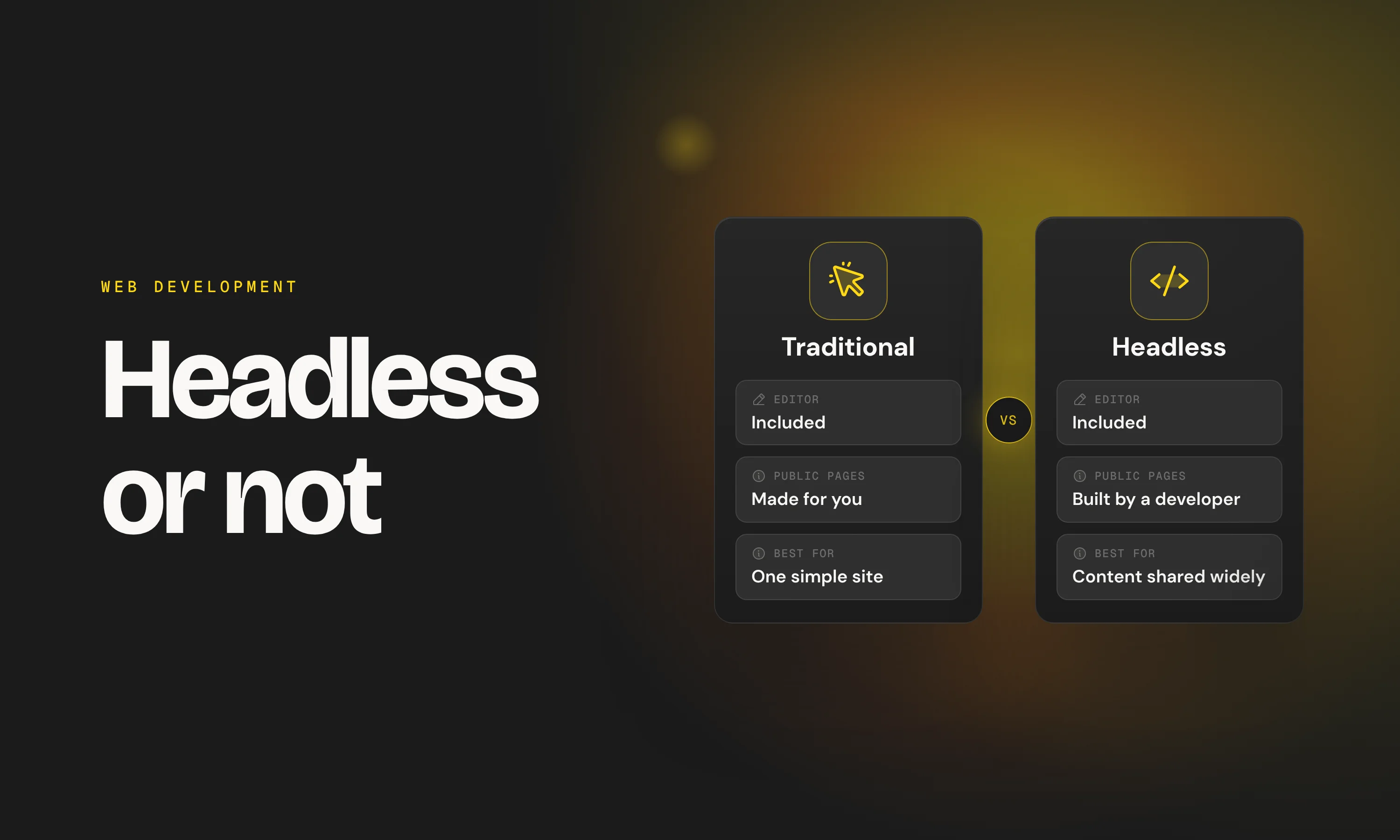
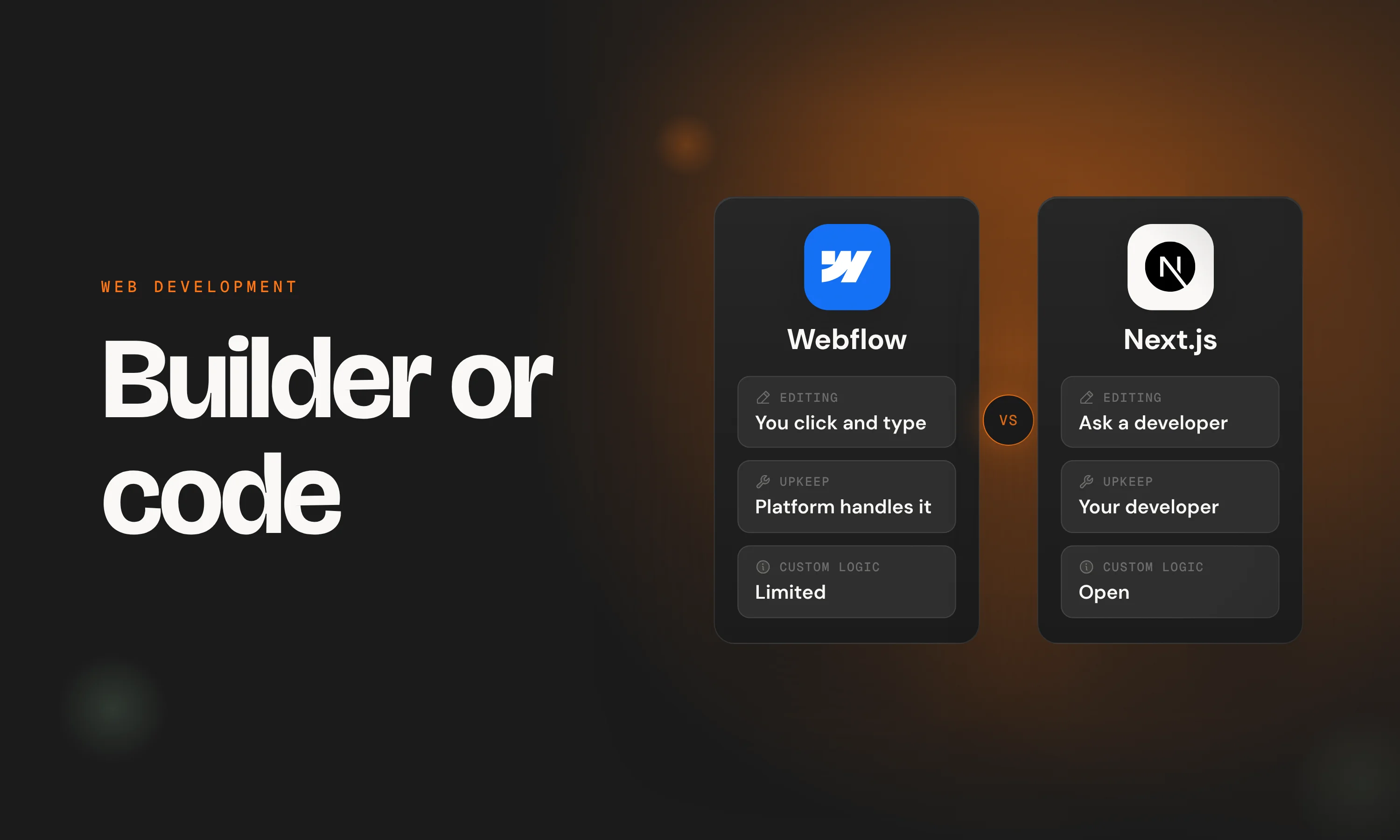
Next.js is a toolkit developers use to write a website from scratch in code. A website builder, like Webflow or Framer, lets you design visually instead. Here is when the coded route is worth it.
Quick answer. Choose a website builder if your site is mostly pages you edit yourself. Choose a Next.js site if the website must act like software, with logins, payments or live data, and you have a developer to look after it. Neither is best for everyone.
What is a Next.js website for business, in plain words?
Think of a builder as a furnished flat. You move in and it works.
A Next.js site is a house built to your plans. Nothing is in the way, but someone has to build it and fix it.
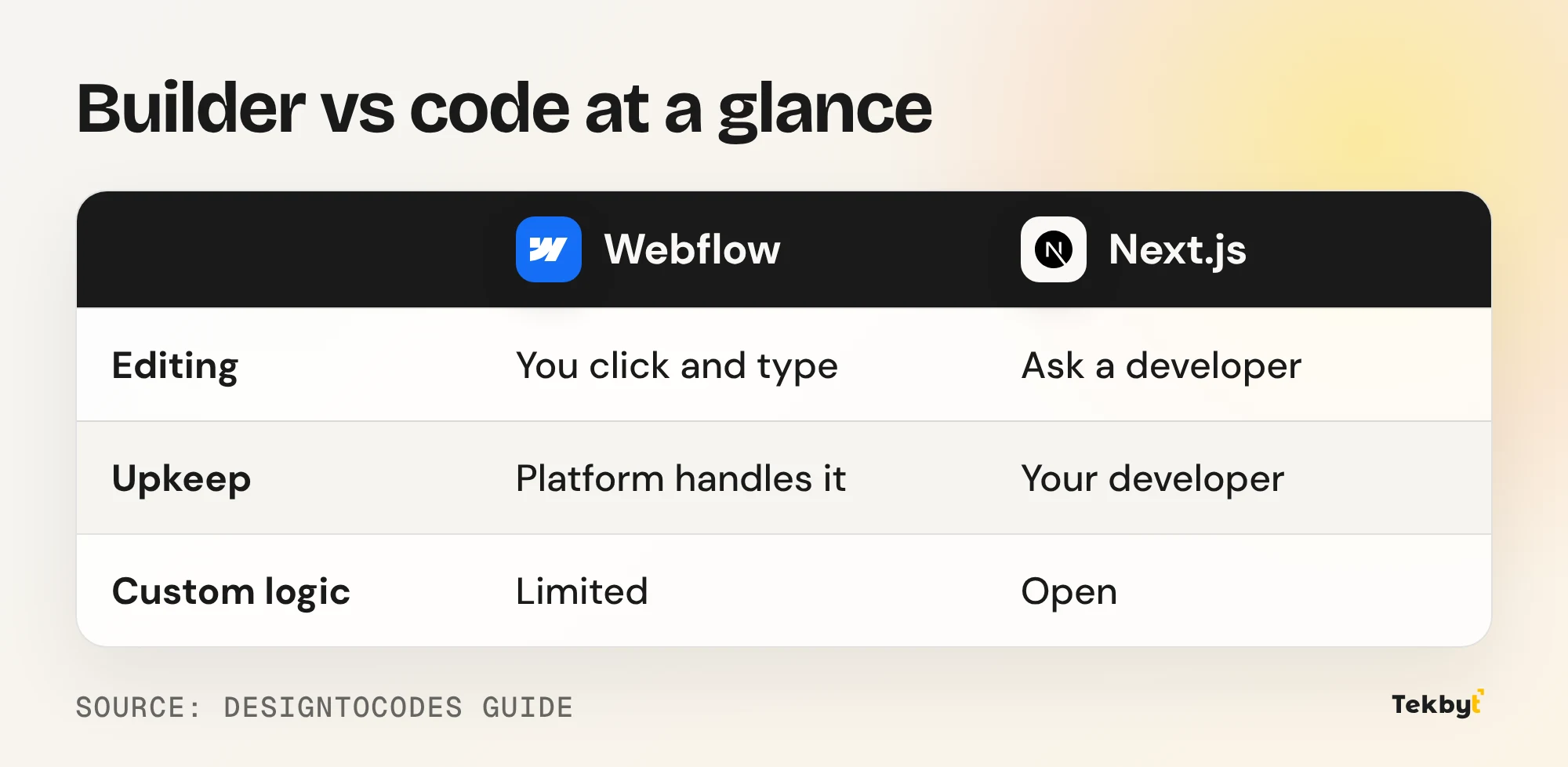
- Builder: you click, type and publish
- Next.js: a developer writes the code, and you ask them for changes
Both end up as normal web pages your visitors see.
When does a coded site beat a website builder?
The honest test is what the site has to do, not how it looks. A guide from DesignToCodes says Next.js fits best when a business needs deep customisation and has technical people behind it.
In everyday terms, coded sites win when your website is also a tool.
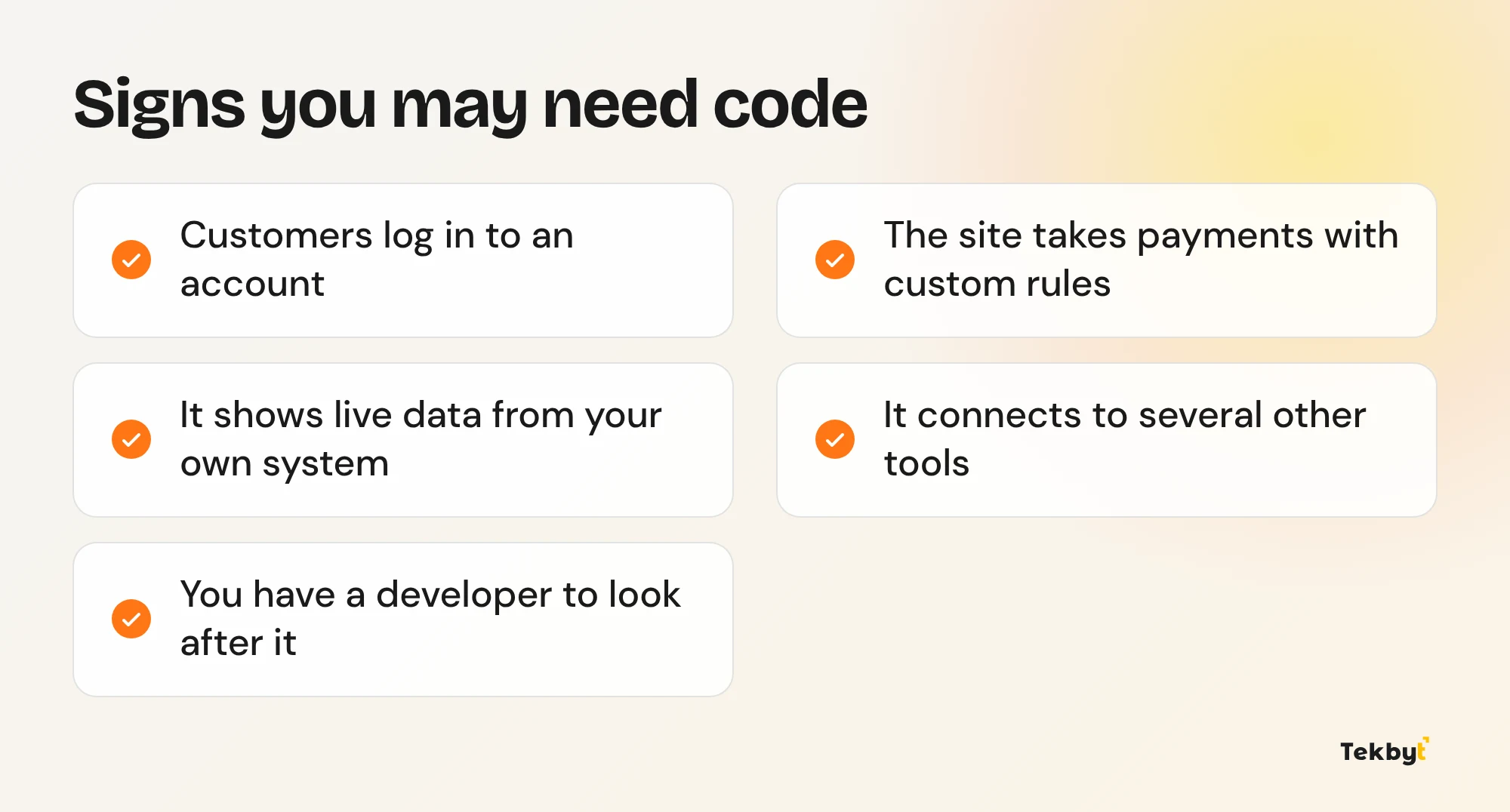
Example: a dental clinic that only shows services and takes enquiries is fine on a builder. A clinic with a patient login, booking rules and records linked to its own system is closer to software.
When is a website builder the smarter choice?
Most business websites are a set of pages: home, services, about, contact and a blog. Builders were made for exactly that.
- You or your team edit text and photos without waiting for anyone.
- You want to launch sooner.
- You prefer not to pay a developer for small changes.
A comparison from ebaqdesign points to Webflow for a content site your team publishes to without a developer. A coded site can do that too, but only after someone builds an editing screen for you.
Who looks after a Next.js site each month?
This is the question most comparisons skip. A builder company runs the hosting (the computer that keeps your site online) and the security updates.
With code, that job moves to you and your developer.
- Software parts get old and need updating.
- Small edits go through a developer, not you.
- If your developer leaves, the next one must understand their work.
That is not a reason to avoid code. It is a reason to ask who will do it, before you sign.
Can you start on a builder and move to code later?
Yes, and many businesses do. A simple site on Webflow or Framer gets you online sooner. When you outgrow it, the design, the text and the page addresses carry over, and the coded version rebuilds the parts that need real logic.
Old page addresses need redirects (signposts that send visitors from the old address to the new one), so you do not lose visitors from search.
A middle route also exists. A headless CMS (a content editor kept apart from the pages) gives you a friendly editing screen while a coded site shows the pages. We explain it in our plain-words guide to headless CMS.
Which one should you choose for your business?
Ask four short questions.
- Must the site run logins, payments or live data?
- Who will change the text every week?
- Who fixes it when something breaks?
- How soon do you need to launch?
If you answer "no logins, I edit it, a platform fixes it, soon", a builder fits. Our guide on website builder vs custom website for a small business goes deeper on that side. For bigger needs, read what big customers expect from a web app.
The honest answer
Code is not better than a builder. It is a different tool for a different job. If your site is a brochure, paying for custom code is like buying a truck to carry a handbag.
We build with Webflow, Framer and Next.js, so we have no reason to push one. See how we work on our web development page.
Not sure whether your site needs code or a builder? We will look at what it must do and tell you straight. Book a 30 minute call.